Stories that teach how stories work
Characters, problems, beginnings, middles and endings: when children shape their own story, they practise the same building blocks they use in reading and writing at school.
What we believe
Thinking like an author
As we shape a story together, we ask the questions every author asks: who is it about, what goes wrong, and how do they fix it? Children make the big choices, then see how those choices hold a story together.
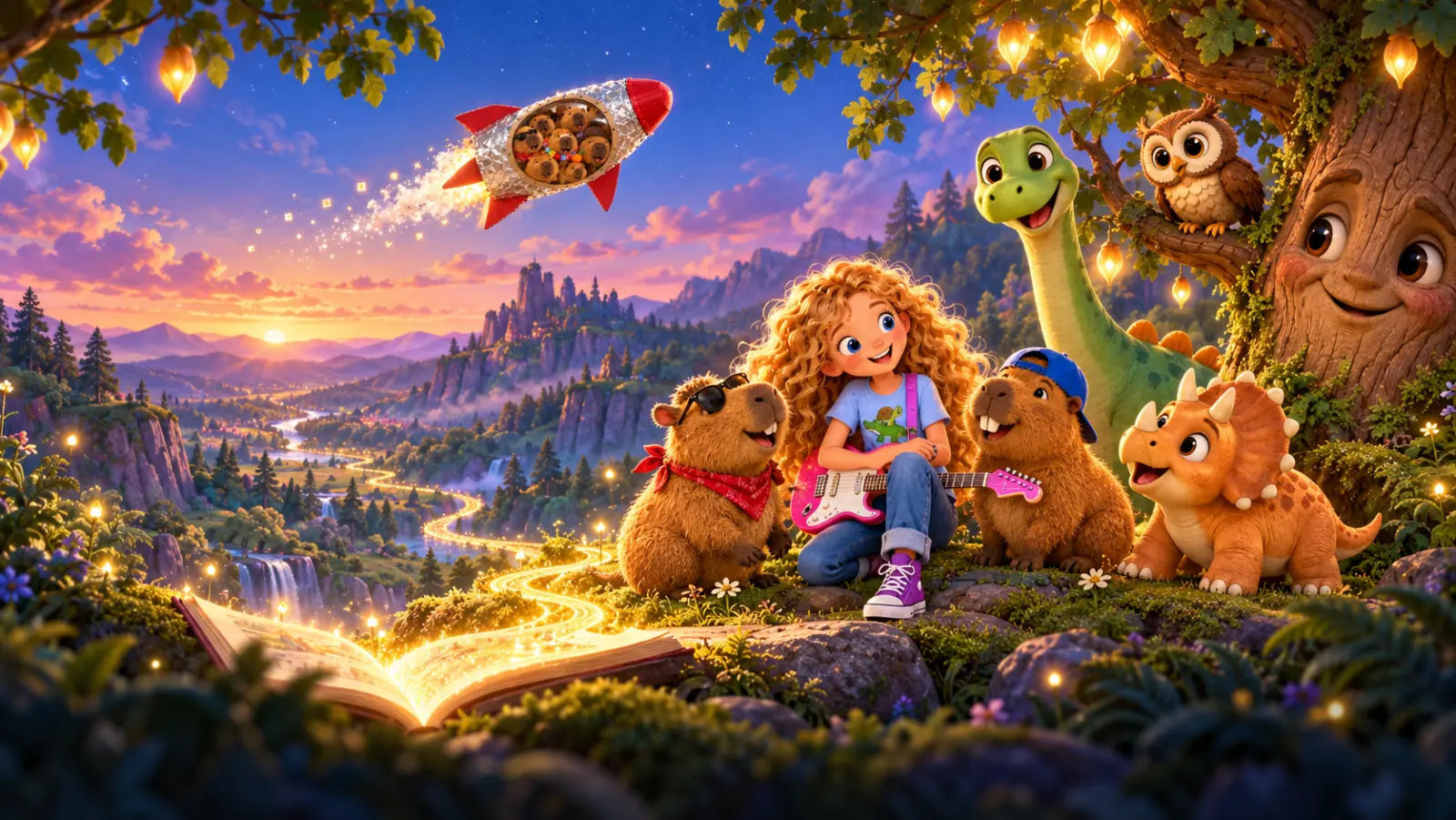
Adventure books do it a different way. The reader chooses what happens next, and finds out how each choice changes the ending.
How it works with us
The building blocks, one at a time
The same pieces children meet in their reading and writing, explored through a story they care about.
-
Characters
Who is it about, and what do they want more than anything?
-
A problem
Every good story needs something to go wrong. What's in the way?
-
Choices
In adventure books the reader decides what happens next, and every choice leads somewhere new.
-
An ending
How do they fix it, and how does everyone feel at the end?
The building blocks of a good story
Whether it's a picture book, a film or a story a child makes up in the bath, good stories are built from the same few pieces.
Characters
Someone the story is about, who wants something. The more a child knows about what their character wants, the easier the rest of the story becomes.
Setting
Where and when it happens. A spooky wood, a busy kitchen, a planet made of jelly: the setting changes what can go wrong.
A problem
Something gets in the way. Without a problem there's no story, just a list of nice things that happened.
An ending
How the problem is solved, and how everyone feels afterwards. Endings are where children often surprise us most.
Why making stories helps with reading and writing
When children build a story themselves, they start to notice how other stories are put together: why the hero needs a problem, why the middle feels exciting, why the ending feels right. That noticing helps when they come to plan their own writing at school.
It also gives them words for it. A child who has decided what their character wants, and what stands in the way, has already done the hardest part of story planning.
Talking about stories at home
You don't need to turn every bedtime book into a lesson. A single question after the story is plenty. Ask what they'd change, who their favourite character was and why, or what might happen next if the story carried on tomorrow.
Stories where the reader chooses
Our adventure books let the reader decide what happens next. Each choice leads somewhere different, so children see straight away how one decision changes the whole story. There's a calm bedtime route too, and a few gentle questions about the story the next morning.
Reading together
Choosing what happens next, together
Choose-your-path stories are made for sharing. Read the page, talk about the choices, and decide together which way to go.
Then read it again tomorrow and choose differently. Same story, a whole new ending.
Age by age
Story skills, age by age
Small questions that grow with your child.
Ages 2 to 4
First, next, last
After a story, ask what happened first, what happened next and how it ended.
Ages 5 to 7
Who and where
Ask who the story was about and where it happened. Could it happen somewhere else?
Ages 8 to 10
Problem and solution
Plan a story together: what's the problem, and three ways the hero could solve it.
Ages 11 to 12
Another point of view
Retell a favourite story from the villain's side. Were they really so bad?
Try it at home: talk about any story
These work with a bedtime book, a film or one of ours.
- Who was the story about, and what did they want?
- What went wrong, and when did you first know?
- How did they fix it? Could it have ended another way?
- Tell it again and swap one thing: a different hero, a different place or a different ending.
- Draw a story mountain: the beginning at the bottom, the big problem at the top and the ending down the other side.
There are no wrong answers. The aim is noticing how a story is put together.
Questions about learning through stories
Does this link to what they learn at school?
The building blocks are the same ones children practise in reading and writing: characters, settings, problems and endings. We don't claim to follow a particular scheme.
Do you work with schools?
Yes. A class can invent a story in a single lesson, or build it over a few weeks of writing and art.
What are adventure books?
Stories where the reader chooses what happens next, with a calm bedtime route and gentle questions about the story the next morning.
What's a story mountain?
A simple way to plan a story: draw a hill, put the beginning at the bottom, the big problem at the top and the ending down the other side.
My child finds reading hard. Will this help?
Lots of children who find reading hard still love telling stories out loud. Starting with their own idea can make stories feel like theirs, which is a good place to begin.
How can I help with story writing homework?
Talk it through before writing anything: who it's about, where it happens, what goes wrong and how it's fixed. A quick story mountain helps too.
Our approach
More about how we make screen time count
-
They create first
Every Clever Cookie story starts with something your child drew, said or dreamed up.
-
Learning hidden in the fun
Story games where every chapter is a mini-game built around a real skill: times tables, spelling, reading and logic.
-
Screen time with an end
Short stories, no adverts and nothing that plays on its own.
-
Off the screen too
Story trails in real woods and parks, adventure books that ask questions the next morning, and print packs that put the characters back on paper.
Every child has a story in them
Choose what happens next in an adventure book, or bring a story to your class.