Learning, hidden in the fun
Spelling and maths they'll actually want to do
Every chapter of a Clever Cookie story game ends with a challenge, and every challenge is set to the player's age. They're too busy finding out what happens next to notice they're practising.
What we believe
A reason to get it right
A spelling list asks children to remember words. A story game asks them to spell their sister's name to open the next chapter. Same skill, very different feeling.
We build the questions out of your story: the names, places, pets and moments your family told us about. That makes them familiar, which makes them easier to start and more satisfying to finish.
What they practise
The skills in every game
-
Spelling
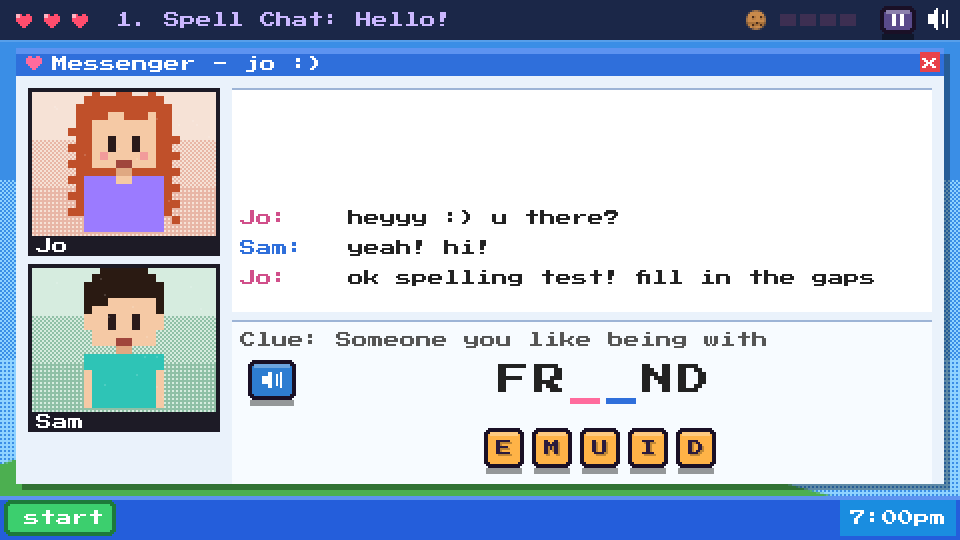
Filling in missing letters and catching letters in order, from short words to tricky ones.
-
Maths
Adding, taking away and times tables, at the speed of a race or a roller coaster.
-
Reading
Story scenes between chapters, word searches and crossword clues about the family.
-
Logic
Sudoku from 4×4 to 9×9, and puzzles that reward thinking before tapping.
Set to each child, not to an average
When you tell us your story, you also tell us who's playing and how old they are. We set the spelling, maths and puzzles for each player, so brothers and sisters of different ages can play the same game and both feel clever.
Brainbox mode is there for children who race through: it makes everything harder, and grown-ups can switch it on for themselves too. Every chapter ends with stars, so replaying for a better score is part of the fun rather than a punishment for getting it wrong.
Little and often
Each chapter takes about three to six minutes, which is just right for one more go before tea. The chapter map shows how far through the story they are, so there's always a natural place to stop and something to look forward to next time.
Ways to play together
- Read the story scenes aloud with younger players, and let them take the controls for the mini-game.
- Take turns with a sibling: one reads the clue, the other answers.
- Ask grandparents to play the family crossword. They know the answers you've forgotten.
- After a chapter, ask what they remember about that part of your family's story.
Questions about the learning
What age is it for?
Story games suit children aged about 6 to 11. Grown-ups love playing through their own story too.
Does it follow the school curriculum?
The games practise the kinds of spelling, maths and reading children work on at primary school, set to their age. They're for fun and practice at home, not a school course.
What if a question is too hard?
Questions are set to each player's age, and every chapter can be replayed. Brainbox mode is optional, for children who want more of a challenge.
Do children need an account?
No. A grown-up buys the game and shares it. Progress saves to your family's account, so children can carry on from any device.
Find out more
More about story games
-
Every mini-game
All eight kinds of challenge, what each one practises and the three game looks.
-
A game as a gift
A personalised video game for birthdays, anniversaries, grandparents and Christmas.
-
What goes into your game
The people, places, moments and jokes we turn into chapters, and how we keep them private.
-
All the questions
Ages, devices, privacy, prices and what happens after you pay.
Ready, player one?
Play the sample game now, then make one about your own family. From £99.