How Clever Trails stories unlock as you walk (and why there's no screen staring)
Clever Trails is built so the phone stays in a pocket. Here's how chapters unlock by walking, by arriving or with a tap on a plaque, and why we designed it that way.
On this page
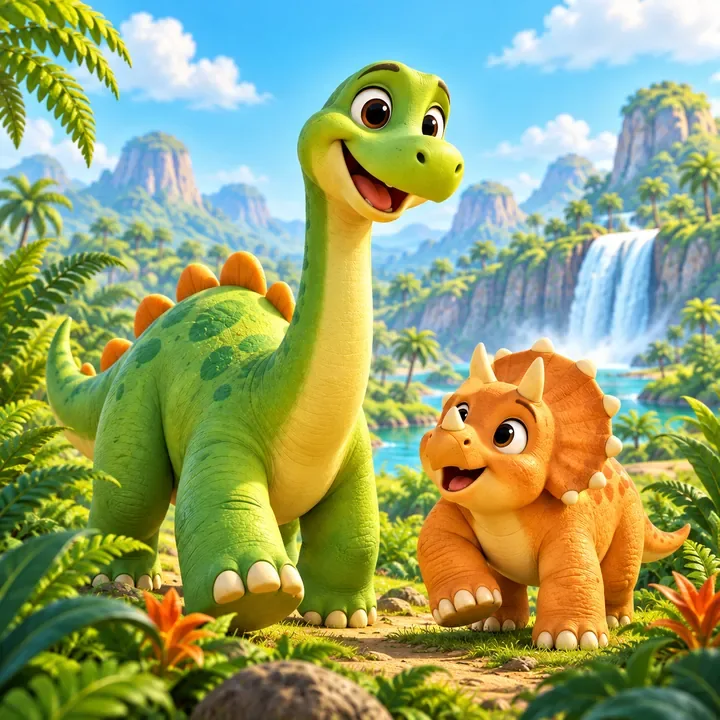
When we started building Clever Trails we had one rule we kept coming back to: the walk is the point, not the phone. Children already spend plenty of time looking at screens. A story walk should get their eyes up, onto the trees and the path ahead.
So Clever Trails is audio-led. A narrator tells the story, sets the challenges and cheers everyone on. The phone mostly stays in a pocket. This post explains how that works in practice, and how each chapter knows when to begin.
A story in chapters
Every Clever Trails story is split into stops, usually six. Each stop is a small chapter: the narrator meets a character, there's a problem to solve, and the children help with a challenge. At the end of each chapter they collect something for the story (lantern seeds, map pieces, rainbow pearls) and earn a badge.
Between stops the narrator keeps things going with little missions: can you spot something green? And something brown? Then it goes quiet and lets you walk.
Four ways a chapter can unlock
How the next chapter begins depends on the kind of trail you're on.
1. By walking
Our play-anywhere stories unlock as you walk. There's nothing to find and no fixed route: once you've walked a little further, the next chapter starts. This is how you can play a story round your local park, along a beach path or on a woodland walk you already know.
2. When you arrive
On some trails each stop has its own spot on the map. When your phone's location shows you've reached it, the chapter begins. You'll want location switched on before you set off, but it doesn't need mobile data.
3. With a tap on a plaque
Some sites have a small Clever Trails plaque at each stop. Tap the phone on it (it has an NFC chip inside, the same technology as contactless payments) or scan its printed code in the app, and the chapter unlocks. Children love finding the plaques, and they make a natural place to stop and gather.
4. Arrive or tap, whichever comes first
Some trails combine the two. If a plaque has gone missing, or you'd rather not get the phone out, arriving at the stop does the job instead.
Whatever the trail uses, its page on Discover tells you before you go.
When the phone does come out
There are a few moments when the phone is useful, and the narrator tells you when:
- Challenges. At each stop the narrator says "Grown-up, take out the phone" and hands over to the children. Some challenges are about moving (tiptoe like a mouse, stomp like a dinosaur), some are about spotting things around you, and some are riddles.
- Tapping a plaque, on trails that have them.
- Collecting the badge at the end of each chapter.
Then it goes back in the pocket and everyone walks on.
Why audio?
We tried other approaches early on, including text on screen at each stop. It didn't work. Children crowded round the phone, the grown-up became a reader rather than a walker, and nobody looked at the wood.
Audio changes that. A voice in the air feels like the story is happening around you. Children look for the character the narrator describes. They listen for the sounds. Every line in a Clever Trails story is voiced, with different voices for each character, so there's nothing to read.
Works without signal
Woods are not known for their 4G. That's why every story downloads in full before you set off: narration, pictures and challenges. Plaque taps work offline too, and location unlocking uses GPS, which doesn't need data.
Try it for yourself
The easiest way to see how it feels is to play a play-anywhere story on a walk you already know. The Lost World Map, with Trixie the triceratops, is a good first one. And if you run a park or woodland and like the sound of plaques at your stops, have a look at Clever Trails for parks.